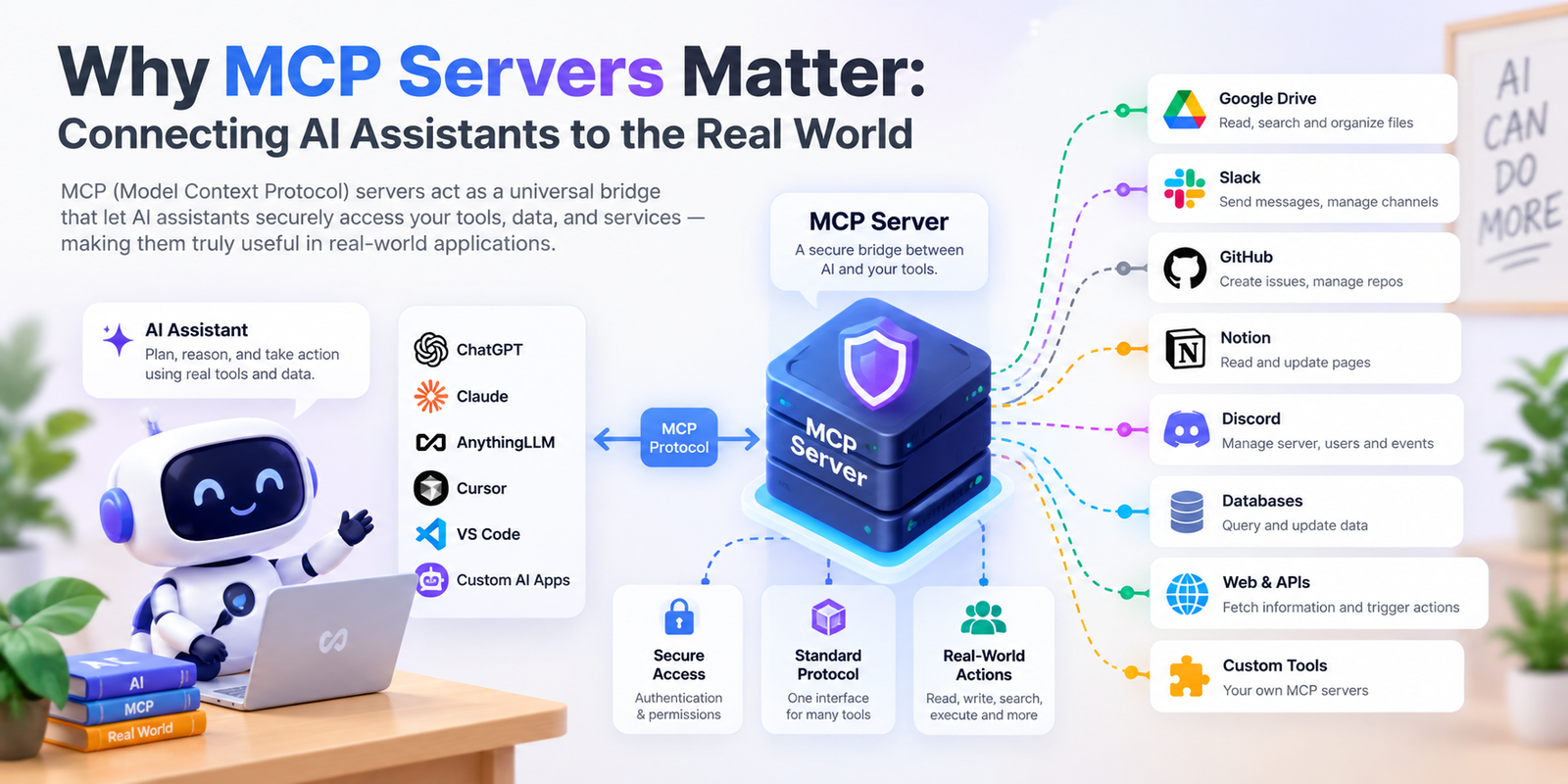
Why MCP Servers Matter: Connecting AI Assistants to the Real World
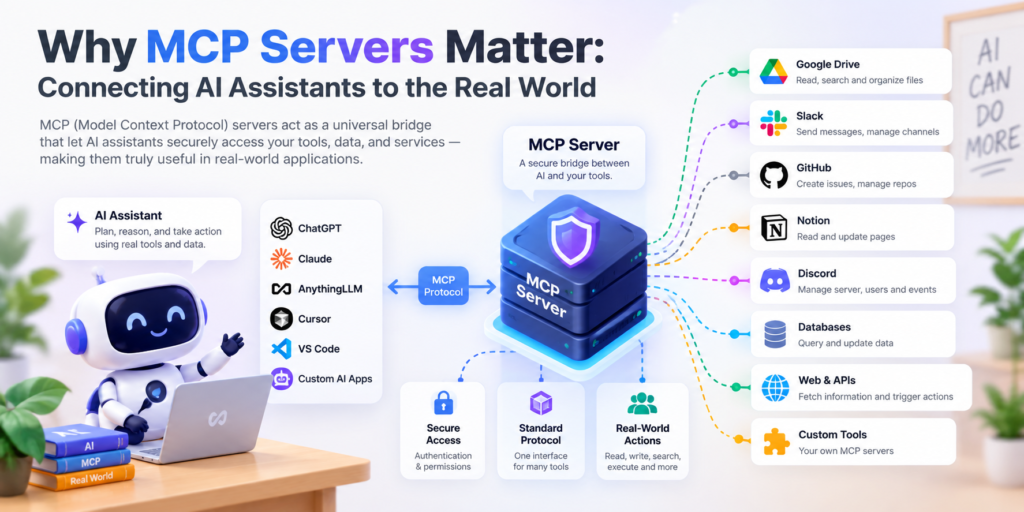
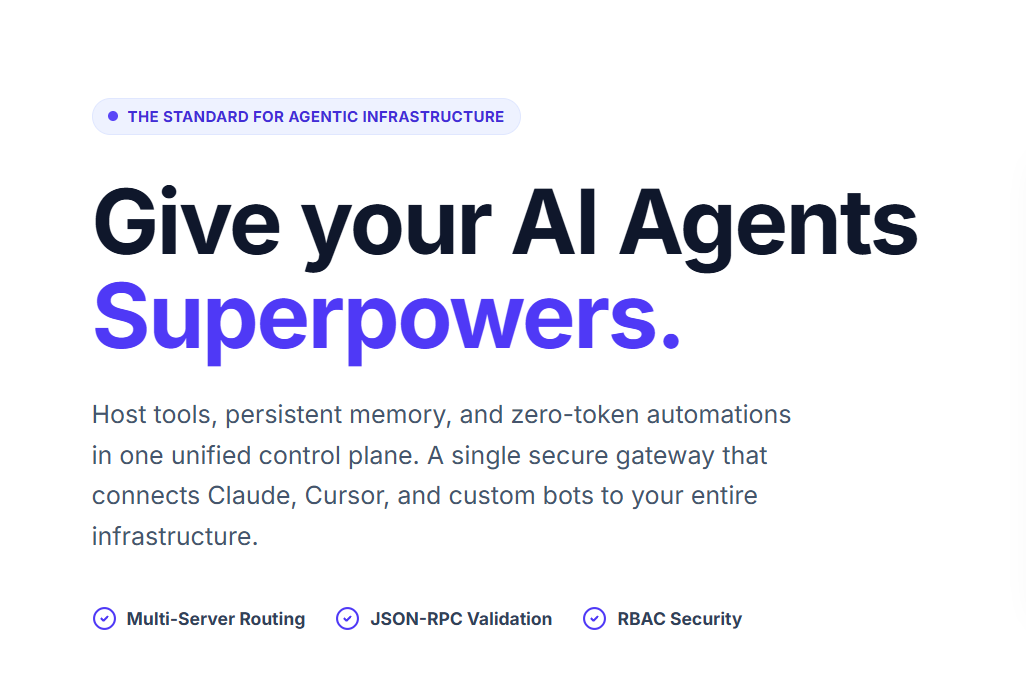
AI assistants like Claude have grown remarkably capable at reasoning and generating text — but on their own, they’re limited to what’s in their training data and the current conversation. MCP (Model Context Protocol) servers change that by giving AI systems a standardized way to connect to real-world tools, data, and applications.
What Are MCP Servers?
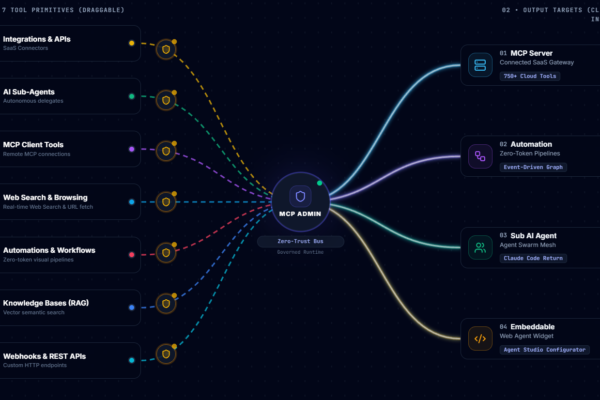
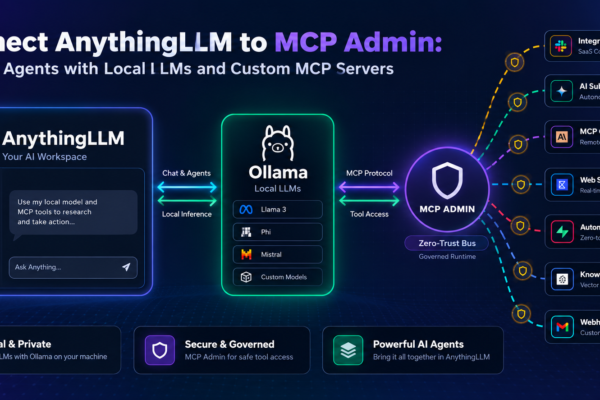
MCP servers act as intermediaries between an AI model and the external resources it needs to get real work done — databases, CRMs, file systems, business software, and more. Instead of every AI application building custom, one-off integrations, MCP provides a common protocol that any compliant AI assistant can use to talk to any compliant tool or data source.
Why They Matter
At their core, MCP servers manage the context and state of an AI’s interactions with outside systems. This is especially important for assistants that need real-time, accurate information rather than static knowledge frozen at a training cutoff. With MCP, an AI assistant can:
- Pull live data from CRMs, databases, or internal systems
- Take actions in other applications, not just generate text
- Stay contextually aware across a task instead of working blind
This turns AI from a passive text generator into an active participant in real workflows — useful in domains like financial analysis, customer service, and supply chain management, where stale or generic answers simply aren’t good enough.
Benefits for Businesses and Developers
For organizations building on top of AI, MCP servers unlock several concrete advantages:
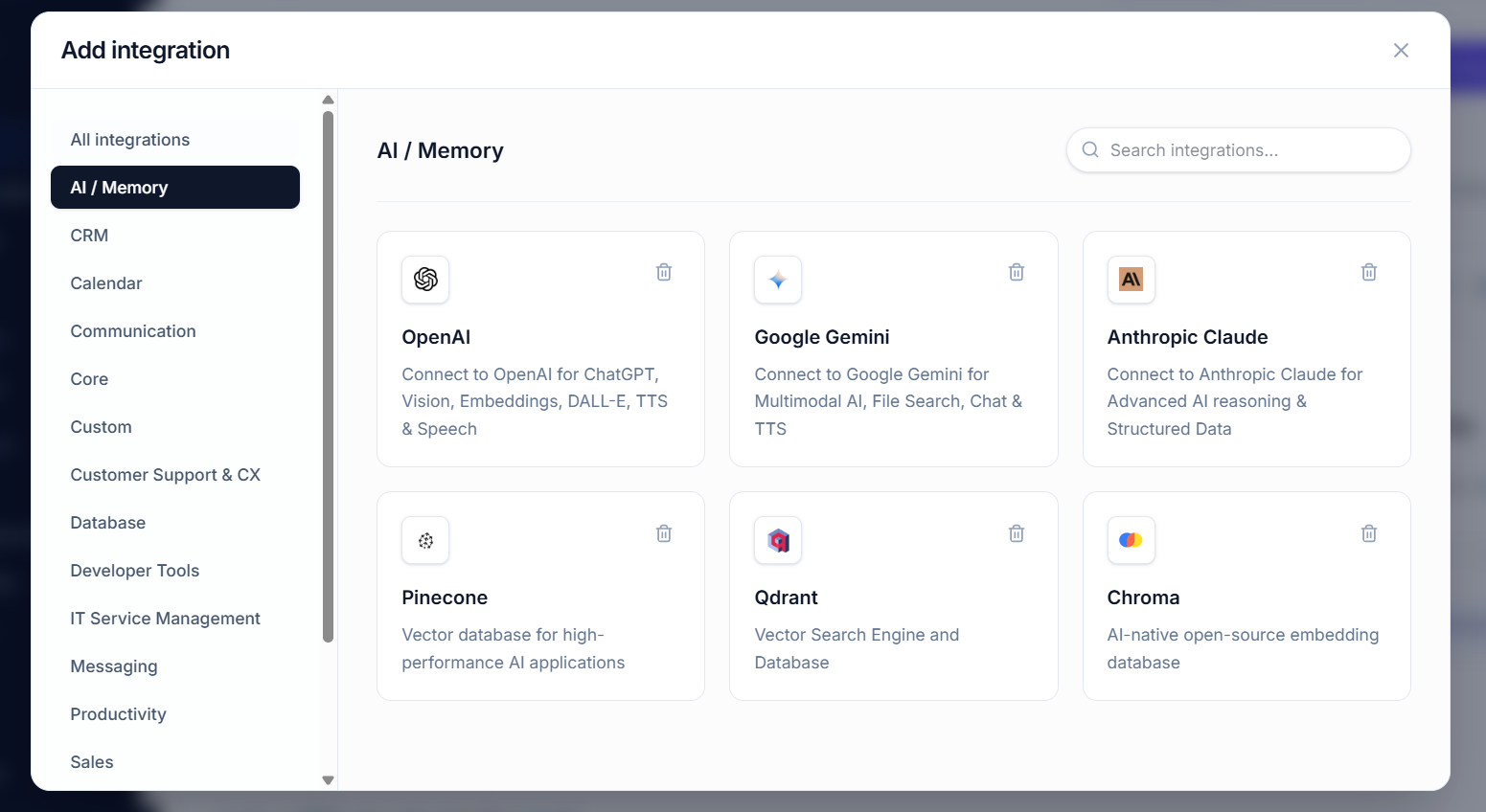
- Faster integration: Connect AI assistants to existing digital infrastructure without rebuilding it around the AI.
- Greater automation: Let AI handle multi-step tasks that span several tools, cutting down manual work.
- Customization: Tailor AI behavior to specific industries and business logic without extensive rework.
- Better governance: Provide controlled, monitored access to sensitive systems, supporting compliance in regulated industries.
The Bottom Line
MCP servers are quickly becoming foundational infrastructure for serious AI deployments. By standardizing how AI assistants connect to the tools and data businesses already rely on, they make AI more accurate, more useful, and far easier to integrate into everyday operations.