Building Hybrid MCP Servers: Complete Architecture Guide for AI, Memory, Tools & Web Search
🚀 AI agents are becoming more useful when they can do more than generate text. A production AI assistant may need to understand private company knowledge, retrieve live CRM data, query databases, search the web, remember previous interactions, and choose the right AI model for the task.
That is where a hybrid MCP server architecture becomes powerful. Instead of connecting an AI application to one isolated source, you can combine knowledge retrieval, business integrations, real-time web search, persistent memory, and multi-model AI orchestration behind a unified context layer.
🧠 What Is a Hybrid MCP Server?
A hybrid MCP server is an MCP-based architecture that combines multiple sources of context and capabilities in one AI workflow. The goal is not simply to expose tools. The goal is to give an AI agent the right context, the right tools, the right memory, and the right model at the right time.
The Model Context Protocol (MCP) provides a standardized way for AI applications to connect with external tools, data sources, and capabilities. In a hybrid architecture, that foundation can become the central integration layer between an AI model and an organization’s wider digital environment.
📚 Private Knowledge
Retrieve relevant internal documents, policies, product information, research, and organizational knowledge.
🔌 Business Tools
Connect CRMs, project management platforms, communication systems, databases, and custom APIs.
🌐 Live Information
Search current public information when internal knowledge is incomplete or outdated.
🏗️ The Five-Component Hybrid MCP Architecture
A practical hybrid MCP server can be designed around five complementary components. Each component solves a different part of the context problem.
1️⃣ Knowledge Base — Persistent Organizational Knowledge
The knowledge base is the system’s long-term source of organizational information. It can contain company documentation, product specifications, internal wikis, sales material, policies, technical documentation, research, meeting notes, FAQs, and other approved business content.
- 📄 Company and product documentation
- 📋 Policies and procedures
- 🧪 Research and technical reports
- 💼 Sales and marketing material
- 📝 Meeting notes and internal knowledge
- ❓ FAQs and support documentation
A semantic retrieval layer can convert this repository into AI-accessible knowledge. Rather than placing every document into a prompt, the system retrieves the most relevant passages for the user’s current question. This is a core pattern behind retrieval-augmented generation (RAG).
2️⃣ Integration Tools — Connect AI to Business Systems
Knowledge retrieval tells an AI what the organization knows. Tools let the AI interact with the systems where operational data lives.
- 💰 CRM — Salesforce, HubSpot
- 📅 Project management — Asana, Jira, Monday.com
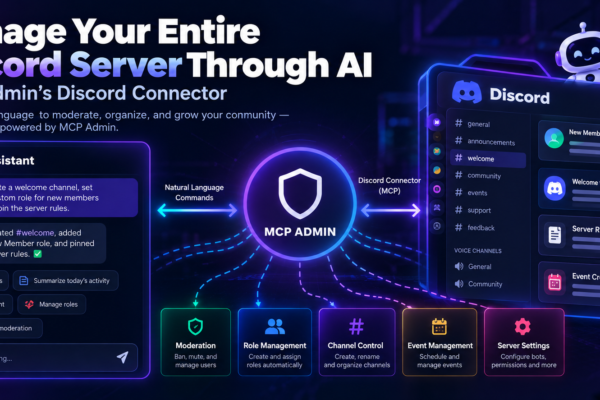
- 💬 Communication — Slack, Gmail, Teams
- 🗄️ Databases and data warehouses
- 🔗 Internal business applications
- ⚙️ Custom APIs and services
For example, an AI assistant does not have to guess who a company’s highest-value customer is. A permitted CRM tool can retrieve current account information, after which the model can reason over the returned data.
3️⃣ Web Search — Real-Time External Intelligence
Internal knowledge has a freshness boundary. A company knowledge base may describe a product perfectly while containing nothing about today’s market movement, competitor announcements, breaking news, or newly published research.
- 🌍 Current news
- 📈 Market developments
- 🏢 Competitor intelligence
- 📊 Industry trends
- 🔬 Newly published research
- 🚀 Product and company announcements
A strong orchestration layer should decide when web search is necessary. An internal policy question may need only the knowledge base. A question about today’s market may need live search. A strategic question may require both internal and external context.
4️⃣ AI Models — Multi-Model Orchestration
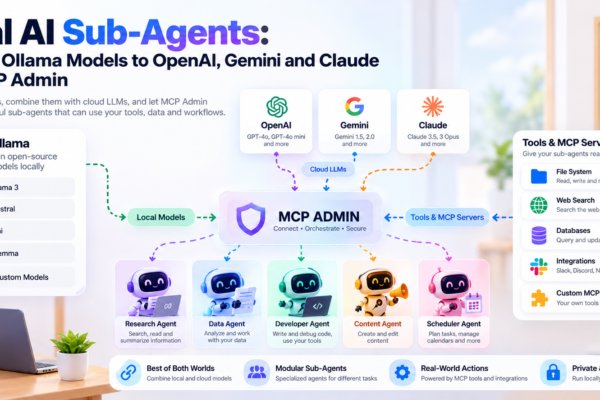
Different AI models can be useful for different workloads. A hybrid architecture can therefore treat models as specialized execution engines rather than forcing every task through one model.
- 🧩 Reasoning-focused models for complex analysis
- 💬 General-purpose models for conversational workflows
- 👁️ Multimodal models for images, documents, and mixed inputs
- 🔒 Local or custom models for specialized or privacy-sensitive workloads
The orchestration layer can select a model based on task complexity, context size, latency, capability, privacy requirements, and cost. The architectural objective is not simply “more models”; it is better model routing.
5️⃣ Memory & State — Persistent Context Across Sessions
Without persistent memory, many AI assistants effectively start from zero whenever a new session begins. A memory layer can preserve selected information such as preferences, previous decisions, workflow state, and useful historical context.
- 🧠 Conversation context
- 👤 User preferences
- 🔄 Workflow state
- ✅ Previous decisions
- 🗂️ Long-running task context
- 🔁 Cross-session continuity
🔄 How the Components Connect
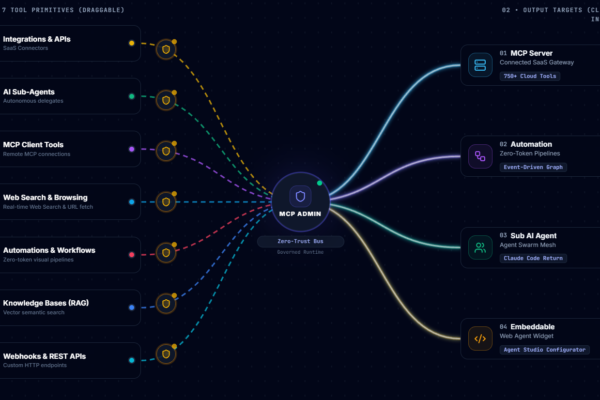
The core architectural idea is context orchestration. The system receives a request, determines what information and capabilities are relevant, retrieves or executes them, selects an appropriate model, and then preserves useful state.
User Query
    ↓
MCP Admin Orchestration
    ↓
┌────────────────────────────────────────┐
│ 1. Check Knowledge Base                │
│    Internal documents and knowledge    │
├────────────────────────────────────────┤
│ 2. Check Integrations                  │
│    CRM, databases, SaaS tools, APIs    │
├────────────────────────────────────────┤
│ 3. Search Web                          │
│    Current news and external data      │
├────────────────────────────────────────┤
│ 4. Access Memory                       │
│    Previous context and user state     │
└────────────────────────────────────────┘
    ↓
Select Best AI Model
    ↓
Generate Response with Full Context
    ↓
Store Relevant State in Memory
⚡ A Real-World Hybrid MCP Workflow
Imagine an executive asks: “Which enterprise customers should our sales team prioritize this week, and what changed since our last review?”
1. 🎯 Understand Intent
Identify that the request needs customer prioritization plus historical comparison.
2. 📚 Retrieve Knowledge
Find relevant account strategy, sales guidance, and internal documentation.
3. 🔌 Query CRM
Retrieve current account, pipeline, engagement, and other permitted data.
4. 🧠 Retrieve Memory
Recover relevant previous reviews, decisions, and workflow context.
5. 🌐 Search Web
Pull current market or competitor intelligence when it affects the answer.
6. 🤖 Generate
Select the appropriate model and generate a grounded response.
Finally, relevant outcomes can be stored in memory so future workflows can build on the interaction. 🔁
🧰 MCP Tools, Resources and Prompts
MCP architectures commonly separate server capabilities into concepts such as tools, resources, and prompts. This separation is useful because retrieving information, performing an action, and guiding a workflow are different concerns.
🛠️ Tools
Executable operations such as querying a CRM, creating an issue, sending a message, or calling an API.
📦 Resources
Context that an AI application can read, such as documents, records, or other structured information.
📝 Prompts
Reusable workflow instructions and templates that help structure specific tasks.
📊 Hybrid MCP vs. Traditional AI Integration
| Capability | Traditional Chatbot | Hybrid MCP Architecture |
|---|---|---|
| Internal knowledge | Limited or manually supplied | Semantic retrieval |
| Business systems | Custom integrations | Reusable MCP tools |
| Live information | Often unavailable | Web search |
| Model strategy | Usually one model | Multi-model orchestration |
| Long-term context | Session dependent | Persistent memory |
| Actions | Limited | Tool-driven workflows |
🔍 Why Semantic Search Matters
Keyword search can fail when users phrase a question differently from the document that contains the answer. Semantic retrieval helps connect concepts rather than relying only on exact words.
“What is our process for handling a customer escalation?”
The relevant document might instead be titled “Enterprise Incident Resolution Procedure.”
A vector-based retrieval system can represent documents and queries semantically and rank potentially relevant content. In a hybrid MCP architecture, that retrieval layer becomes one of several context sources available to the orchestrator.
🔐 Security, Permissions & Governance
The more systems an AI can access, the more important governance becomes. A production MCP architecture should treat every tool and resource as a controlled capability.
- 🔒 Least privilege: provide only the permissions required.
- 🪪 Authentication: verify users and connected services.
- 🚦 Authorization: control which tools and resources each user can access.
- 🔑 Secret management: protect API keys, tokens, and credentials.
- 📋 Auditability: record important tool calls and actions.
- 🧱 Data boundaries: control what enters model context.
- 🙋 Human approval: require confirmation for sensitive or irreversible operations.
🚀 Why MCP Admin Fits the Hybrid Architecture
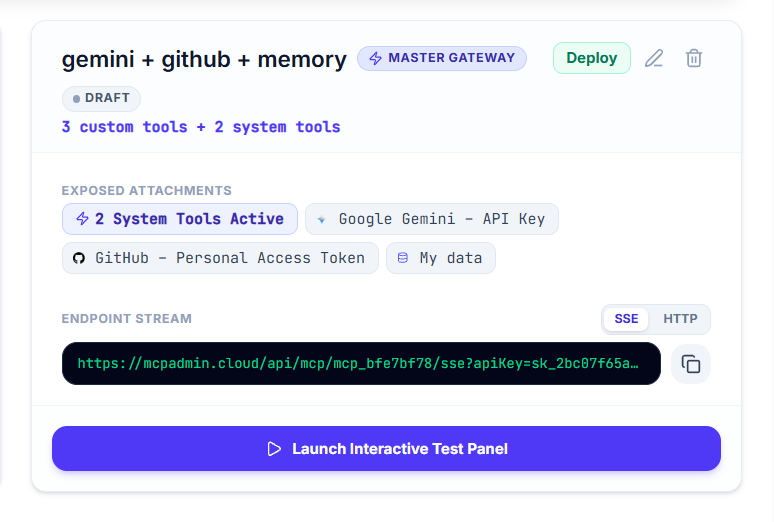
MCP Admin is designed around the idea of bringing AI context, integrations, memory, and web capabilities together instead of forcing teams to build every connection independently.
For teams building AI agents, the value of a platform approach is straightforward: the AI layer can focus on reasoning and workflows while the MCP infrastructure handles the connective tissue between models, knowledge, business systems, and external information.
⚡ Build the Context Layer, Not Just Another Chatbot
A production AI system becomes significantly more useful when it can securely retrieve knowledge, call tools, search the web, remember context, and select the appropriate model.
💡 Production Design Principles
- Keep context retrieval modular. Knowledge, web search, and integrations should be independently accessible.
- Separate reads from writes. Reading information and changing business data should have different permission boundaries.
- Retrieve only useful context. Sending everything to the model increases noise and can waste context capacity.
- Route models intelligently. Match model capability to the actual workload.
- Make memory selective. Store useful durable context rather than indiscriminately retaining every message.
- Observe tool usage. Production systems should make it possible to understand which tools and context influenced an answer.
- Design for failure. If a tool or search provider is unavailable, the system should fail safely rather than fabricate information.
🎯 Common Hybrid MCP Use Cases
💼 AI Sales Assistant
Combine CRM data, sales documentation, historical context, and market intelligence to prioritize accounts and opportunities.
🎧 AI Support Agent
Retrieve product documentation, inspect permitted customer data, search current information, and maintain conversation continuity.
🔬 AI Research Assistant
Combine internal research with live web search and reasoning models to create context-rich analysis.
📈 Executive Intelligence
Bring together company knowledge, operational data, market intelligence, and historical decisions for executive briefings.
🔮 The Future of AI Is Context Orchestration
The next generation of AI applications will not be defined only by which language model they use. Their effectiveness will increasingly depend on whether they can access the right context and capabilities at the right moment.
MCP provides an important interoperability layer. A hybrid architecture extends that idea by combining private knowledge, live information, executable tools, persistent memory, and model orchestration into one workflow.
The result is a shift from “chat with an AI” to “operate through an AI interface connected to your information and software.” 🤖⚙️
❓ Frequently Asked Questions
What is MCP in AI?
MCP, or Model Context Protocol, is a protocol for connecting AI applications with external tools, data sources, and capabilities through a standardized interface.
What makes an MCP server hybrid?
A hybrid MCP server combines multiple capability types, such as internal knowledge retrieval, external integrations, web search, persistent memory, and multiple AI models.
Can an MCP server connect to a CRM?
Yes. CRM functionality can be exposed through MCP tools, allowing an AI application to retrieve approved CRM information and, where permissions allow, perform actions through the connected service.
Why does a hybrid MCP server need web search?
Internal knowledge can become outdated. Web search gives an AI workflow access to current public information such as news, market developments, competitor activity, and recently published material.
What is persistent memory in an AI agent?
Persistent memory stores selected context across sessions, such as user preferences, previous decisions, workflow state, or relevant conversation history.
Does MCP replace an AI model?
No. MCP is an integration and context protocol. The AI model remains responsible for reasoning and generation, while MCP can provide the tools and contextual information the model needs.
🚀 Ready to Build a More Capable AI Stack?
Connect knowledge, tools, web search, memory, and AI models through a unified MCP architecture.
Learn more: MCP Admin — AI tools, integrations, memory, and context infrastructure.